By: Jeremy Kadlec | Comments | Related: > SQL Server Agent
Problem
With so many security changes in SQL Server 2005, how did the security changes affect SQL Server Agent? I have heard about SQL Server Agent Proxies, but I am not too familiar with them. How do I set them up? What dependencies do they have? What is the security benefit?
Solution
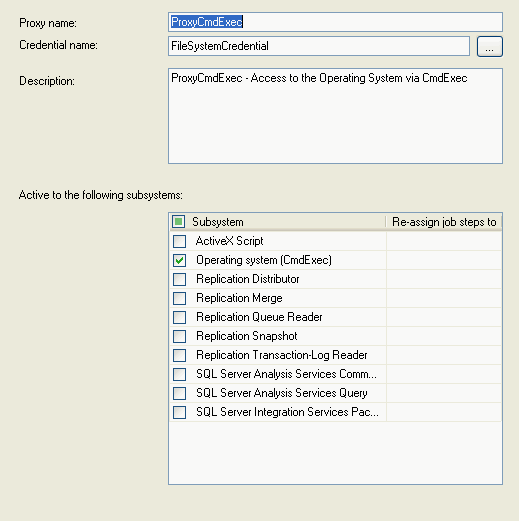
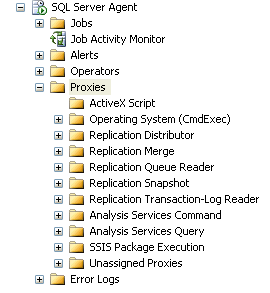
In SQL Server 2000, a single configuration was available for the SQL Server Agent Proxy account. With SQL Server 2005, now 11 different proxies are available (see #1 below) for each of the SQL Server Agent subsystems. This offers a great deal of flexibility and greater security for each of these subsystems for logins and roles that do not have administrative rights to SQL Server, but need to manage SQL Server Jobs.
In order to setup the SQL Server Agent Proxy, it depends on an existing credential at the SQL Server level that maps to a Windows domain login in SQL Server. By default SQL Server does not ship with any predefined credentials, so to set one up in Management Studio for the purposes of SQL Server Agent Proxies, navigate to the root folder| Security folder | Credentials folder | right click on the Credentials folder | select the New Credential option and then enter the name, identity (Windows domain login in SQL Server) and password.
Once the credential is setup, then the SQL Server Agent Proxy must be setup. This can be achieved by the following steps:
| ID | Description | Screen Shot |
| 1 | In Management Studio, navigate to the Proxies folder and right click to select the New Proxy option. |
|
| 2 | General Tab - Specify the following items:
|
 |
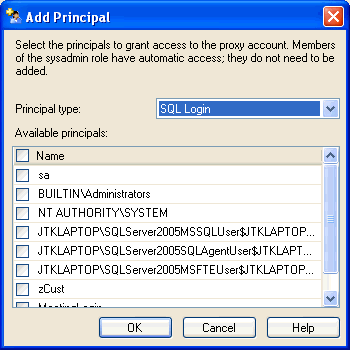
| 3 | Principals Tab - From the drop down list, select the Principal type (SQL Login, MSDB role, Server role) and the associated login or role for the Proxy. |
|
| 4 | Principal Tab - This will reflect the selections from step 3. | 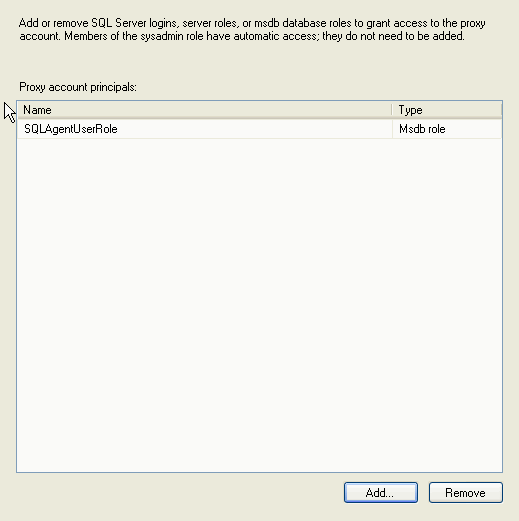 |
| 5 | References Tab - Initially, this tab will not have any data until the Proxy account is specified for specific Job Steps. Once the proxy account is used in 1 or more Job Steps, this interface can become very handy to see where the Proxy account is used across all Job Steps on a single SQL Server instance. | 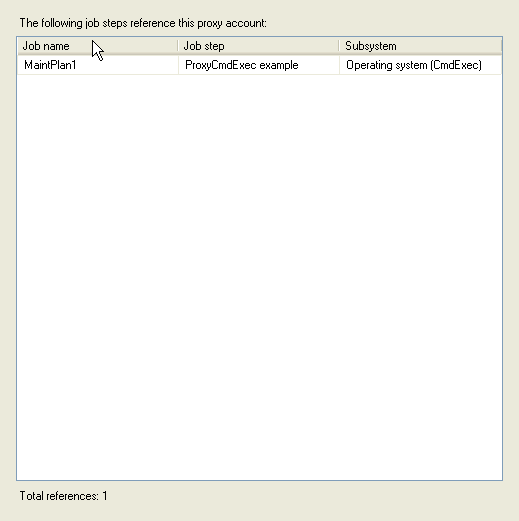 |
| 6 | Job Step - To specify a Proxy account for a Job Step, simply change the 'Run as' parameter to the new Proxy account i.e. ProxyCmdExec as opposed to the 'SQL Agent Service Account' default value. | 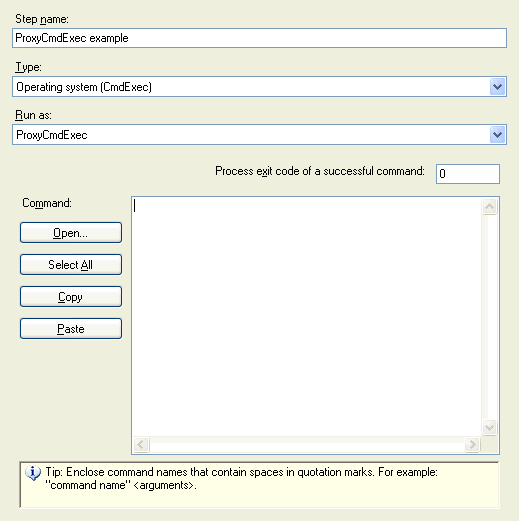 |
Next Steps
- As you begin to work with SQL Server 2005, do not overlook this native functionality to improve the overall security of your SQL Server.
- Depending on your application or overall production environment, the proxies may enable you to significantly change how SQL Server jobs are managed from your SQL Server 2000 world.
- Check out these additional MSSQLTips on SQL Server Agent:






About the author
 Jeremy Kadlec is a Co-Founder, Editor and Author at MSSQLTips.com with more than 300 contributions. He is also the CTO @ Edgewood Solutions and a six-time SQL Server MVP. Jeremy brings 20+ years of SQL Server DBA and Developer experience to the community after earning a bachelor's degree from SSU and master's from UMBC.
This author pledges the content of this article is based on professional experience and not AI generated.
View all my tips